Digital Trust Alliance

Digital Trust Certification

The Alliance certifies professionals across digital trust as a single discipline spanning its focus areas. Every application is assessed on evidence and approved by the DTA Council, and every badge is issued as a verifiable credential.

Focus areas

The documented knowledge domains of the scheme. Every accreditation it recognises sits in one of them, and every level is assessed against them.

  1. 01Cybersecurity
  2. 02Information Security
  3. 03Governance
  4. 04Risk
  5. 05Compliance
  6. 06Privacy
  7. 07Cyber Law

The accreditation levels

Certified Digital Trust Foundation

★

Recognises a working knowledge of digital trust as a single discipline spanning cybersecurity, information security, governance, risk and compliance, privacy, and cyber law. Holders understand the core concepts, vocabulary and obligations of each domain and how they reinforce one another, and can contribute to digital trust work within an established framework and under professional direction. Awarded on assessed evidence and approved by the DTA Council. Foundation is the entry tier of the Digital Trust certification scheme.

What you need to apply

Accreditations
One recognised accreditation in any one of the seven focus areas, evidenced at application.

The Alliance does not operate its own accreditation for the Foundation level. The level is claimed by providing evidence of an accreditation the scheme already recognises.

How it is earned

Apply through the DigiT Portal with a record of your professional background in digital trust - cybersecurity, information security, governance, risk and compliance, privacy, and cyber law - together with supporting evidence and two professional referees. The application is assessed in full against the Foundation criteria by the Alliance's assessment panel; no interview is required at this tier. The panel's recommendation is put to the DTA Council for approval. The badge is issued once the approved applicant has completed the half a day Digital Trust awareness session and signed the DTA Code of Ethics.

2 badges issued to date.
Certified Digital Trust Practitioner

★★

Recognises the independent application of digital trust as a single discipline spanning cybersecurity, information security, governance, risk and compliance, privacy, and cyber law. Holders work without professional direction: they take responsibility for their own digital trust work, apply the obligations of each domain to real situations, and exercise judgement where guidance does not settle the question. Awarded on assessed evidence and panel interview, and approved by the DTA Council. Practitioner is the practising tier of the Digital Trust certification scheme.

What you need to apply

Accreditations
Two recognised accreditations covering at least four different focus areas.
Experience
Five years of combined professional experience across two of the accredited focus areas.
Demonstrates
A clear understanding of all seven focus areas.

How it is earned

Apply through the DigiT Portal with a record of your professional background in digital trust - cybersecurity, information security, governance, risk and compliance, privacy, and cyber law - together with examples of your applied practice, supporting evidence and two professional referees. The application is assessed in full against the Practitioner criteria by the Alliance's assessment panel, and the applicant then attends a panel interview. The panel's recommendation is put to the DTA Council for approval. The badge is issued once the approved applicant has completed the half-day Digital Trust awareness session and signed the DTA Code of Ethics.

1 badge issued to date.

Certified Digital Trust Expert

★★★

Recognises breadth across the whole digital trust discipline together with demonstrated depth in one or more of its domains - cybersecurity, information security, governance, risk and compliance, privacy, and cyber law. Holders hold an informed view of the discipline as a whole and are accountable specialists in their own area, backed by substantial practice experience: they set direction, make defensible judgements where domains pull against each other, and are relied on to advise leadership and develop others. Awarded on assessed evidence and panel interview, and approved by the DTA Council. Expert is the senior tier of the Digital Trust certification scheme.

What you need to apply

Accreditations
Four recognised accreditations covering at least four different focus areas.
Experience
Fifteen years of combined professional experience across four accredited focus areas.
Demonstrates
The applicability of all seven focus areas.

How it is earned

Apply through the DigiT Portal with evidence of breadth across the digital trust domains and demonstrated depth in one or more nominated domains - cybersecurity, information security, governance, risk and compliance, privacy, or cyber law. The application must set out your specialist practice record and your contribution to the discipline, with supporting evidence and two professional referees. Every application is assessed in full, including the nominated specialisation, and the applicant then attends a panel interview examining both breadth across the discipline and depth in the nominated domain. The panel's recommendation is put to the DTA Council for approval. The badge is issued once the approved applicant has completed the half-day Digital Trust awareness session and signed the DTA Code of Ethics.

2 badges issued to date.
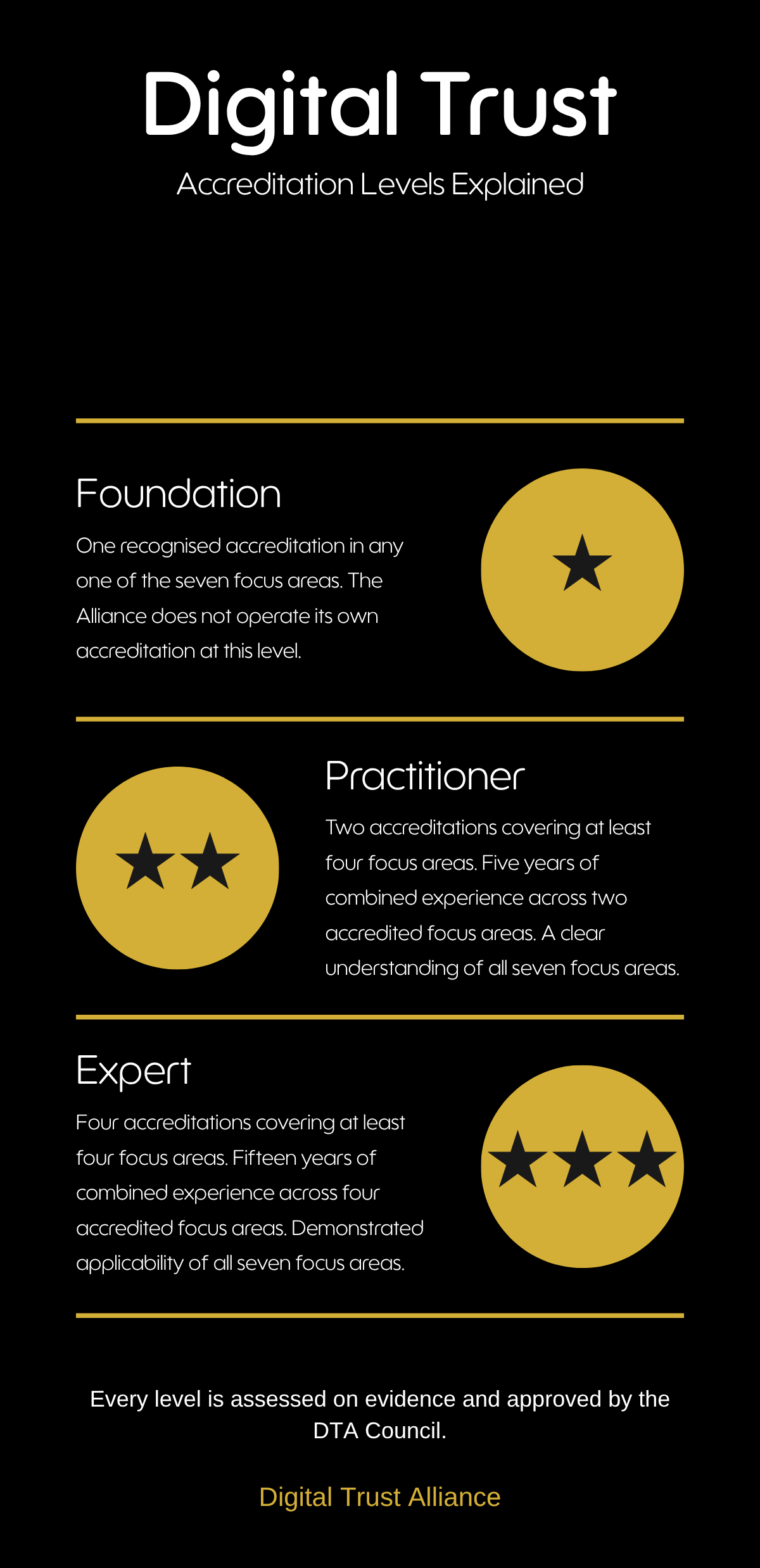
The three accreditation levels at a glance. Foundation, one star: one recognised accreditation in any one of the seven focus areas; the Alliance does not operate its own accreditation at this level. Practitioner, two stars: two accreditations covering at least four focus areas, five years of combined experience across two accredited focus areas, and a clear understanding of all seven focus areas. Expert, three stars: four accreditations covering at least four focus areas, fifteen years of combined experience across four accredited focus areas, and demonstrated applicability of all seven focus areas.
The three levels at a glance.

Recognised accreditations

This list is indicative rather than exhaustive. The Board is still settling which further accreditations the scheme recognises, and which of them count toward the Practitioner and Expert levels. If you hold a credential that is not listed, apply anyway and the assessment panel will consider it.

Cybersecurity

  • OSCP Offensive Security
  • Security+ CompTIA
  • CEH EC-CouncilCounts toward Foundation only.
  • CC ISC2Counts toward Foundation only.

Information Security

  • CISSP ISC2
  • SSCP ISC2
  • CISM ISACA

Governance

  • CGEIT ISACA
  • AIGP IAPP
  • CISA ISACA

Risk

  • CRISC ISACA
  • RMP PMI
  • CRMP RIMS
  • CISA ISACA

Compliance

  • PMP PMI
  • CRCM ABA

Privacy

  • CIPP IAPP
  • CIPM IAPP
  • CDPSE ISACA

Cyber Law

No accreditations have been agreed for this focus area yet. Applications citing experience here are still assessed.

How to apply

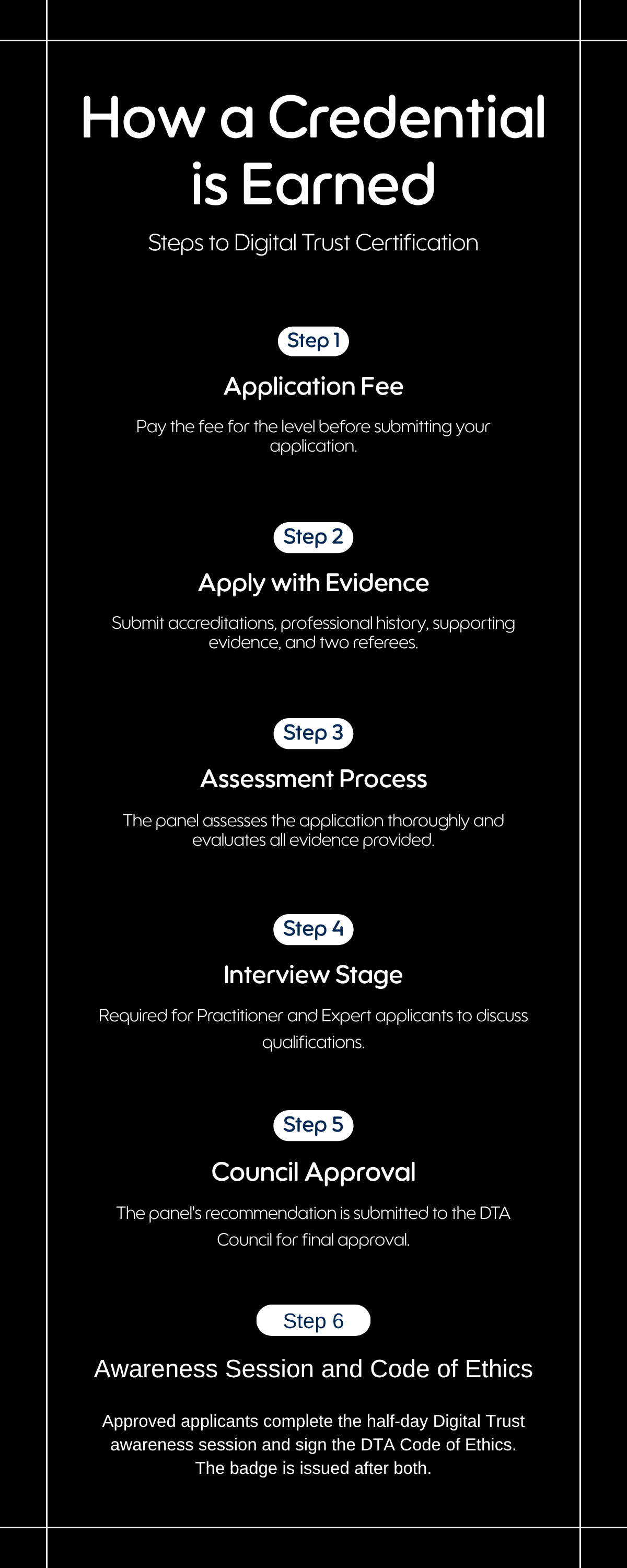
  1. Pay the application fee. Each level carries its own fee, shown when you start your application. The assessment process begins once the payment has settled; if a payment does not complete, the application stays a draft and nothing is assessed.
  2. Apply with your experience. Submit your accreditations, professional history, a self-assessment, supporting evidence and two professional referees.
  3. Assessment. Every application is assessed in full. Practitioner and Expert applicants also attend an interview; Expert applications are examined for breadth across the discipline and depth in a nominated focus area.
  4. Council approval. The assessment panel's recommendation is put to the DTA Council.
  5. Awareness session and Code of Ethics. Approved applicants complete a half-day Digital Trust awareness session and sign the DTA Code of Ethics. The badge is issued after both.
The six steps to a Digital Trust credential, in order: pay the application fee before submitting; apply with your accreditations, professional history, supporting evidence and two referees; the panel assesses the application in full; Practitioner and Expert applicants attend an interview; the panel's recommendation goes to the DTA Council for approval; approved applicants complete the half-day awareness session and sign the Code of Ethics, after which the badge is issued.

To enquire about applying, contact the Alliance.

Verifying a credential

Every badge the Alliance issues is an Open Badges 3.0 credential, signed and independently verifiable. A holder's badge carries its own public page, and anyone given a badge code can check it against the issuer without going through the holder.